
Top Menu

NASA logo
TAP

Tag Archives | Air

IMPACTS

IMPACTS

Investigation of Microphysics and Precipitation for Atlantic Coast-Threatening Snowstorms (IMPACTS)

New NASA research project employs an impressive array of technology to discern how and why intense bands of snow form in winter storms in order to supply forecasters with data to improve predictions of severe winter snowfall.

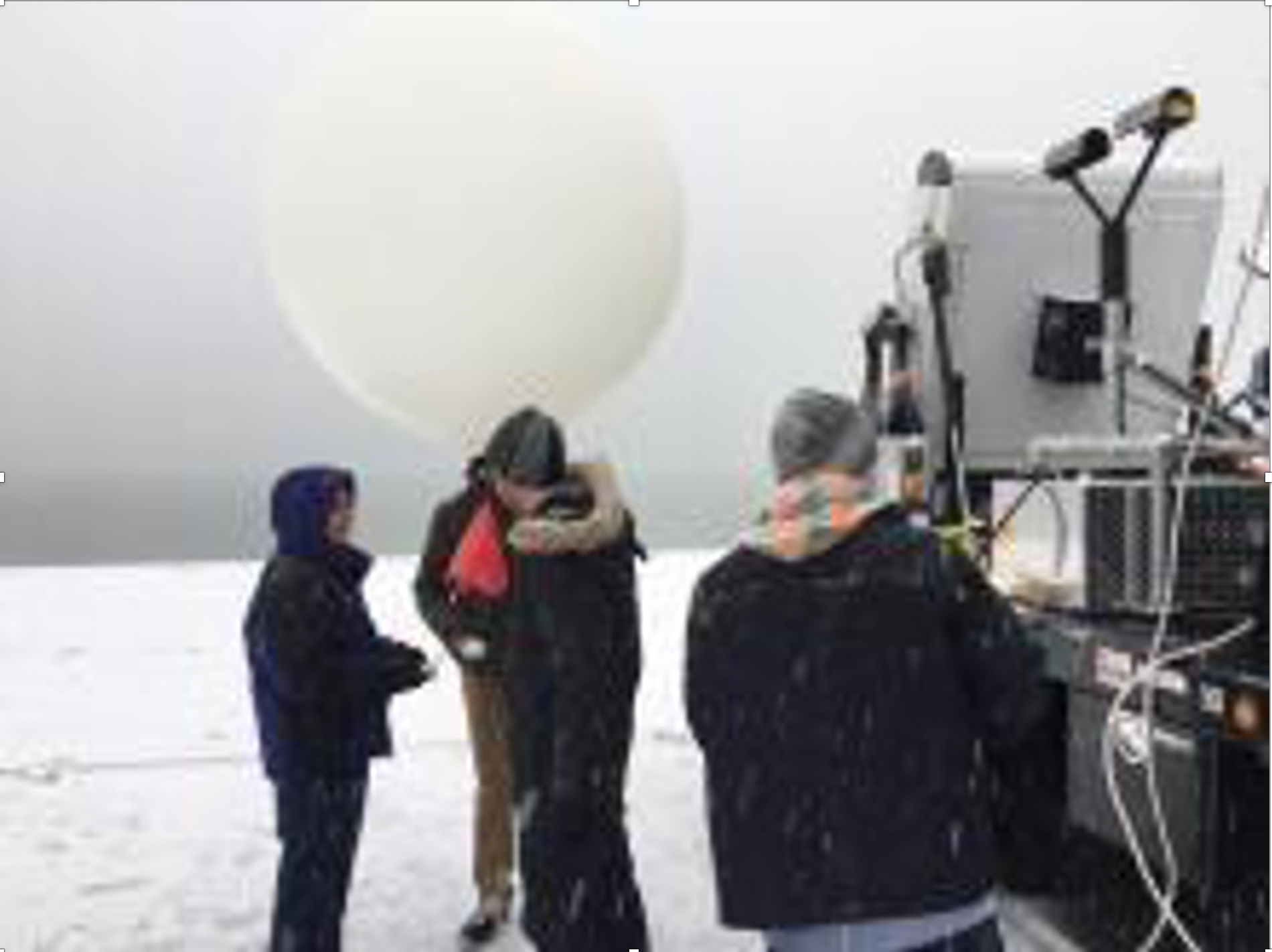
IMPACTS is carrying out several major field campaigns that will study how snow bands develop and grow in hazardous East Coast snowstorms, something that has not been the focus of a major research campaign in 30 years! The US East Coast has many large cities and population centers, so the snow from these snowstorms can have a big societal impact on transportation, commerce, and public safety. The data that IMPACTS collects will be used to improve how we forecast snow. Heavy snow falls from long narrow “snow bands” within storms. The unevenness of the snow bands within the storm is what makes predicting snowfall amounts so difficult. Which storms have strong snow bands and which storms do not? Can we measure snowfall from these narrow snow bands from space? Can we predict the location of the most intense snowfall? IMPACTS will help us find out! Better predictions mean communities can be proactive in protecting populations from oncoming hazards and disruptions.

“I have loved watching clouds and the sky for as long as I can remember. I have always loved doing outdoor activities such as skiing, hiking, biking and gardening, and understanding the weather, clouds and processes that create the rain and snow help me decide when and where to do those activities. Now as a scientist I not only get to admire the sky and the clouds, but learn about my favorite storms – snowstorms – and learn about them on all scales, down to the processes that make the snow and organize the snow into snowbands.” – Lynn McMurdie

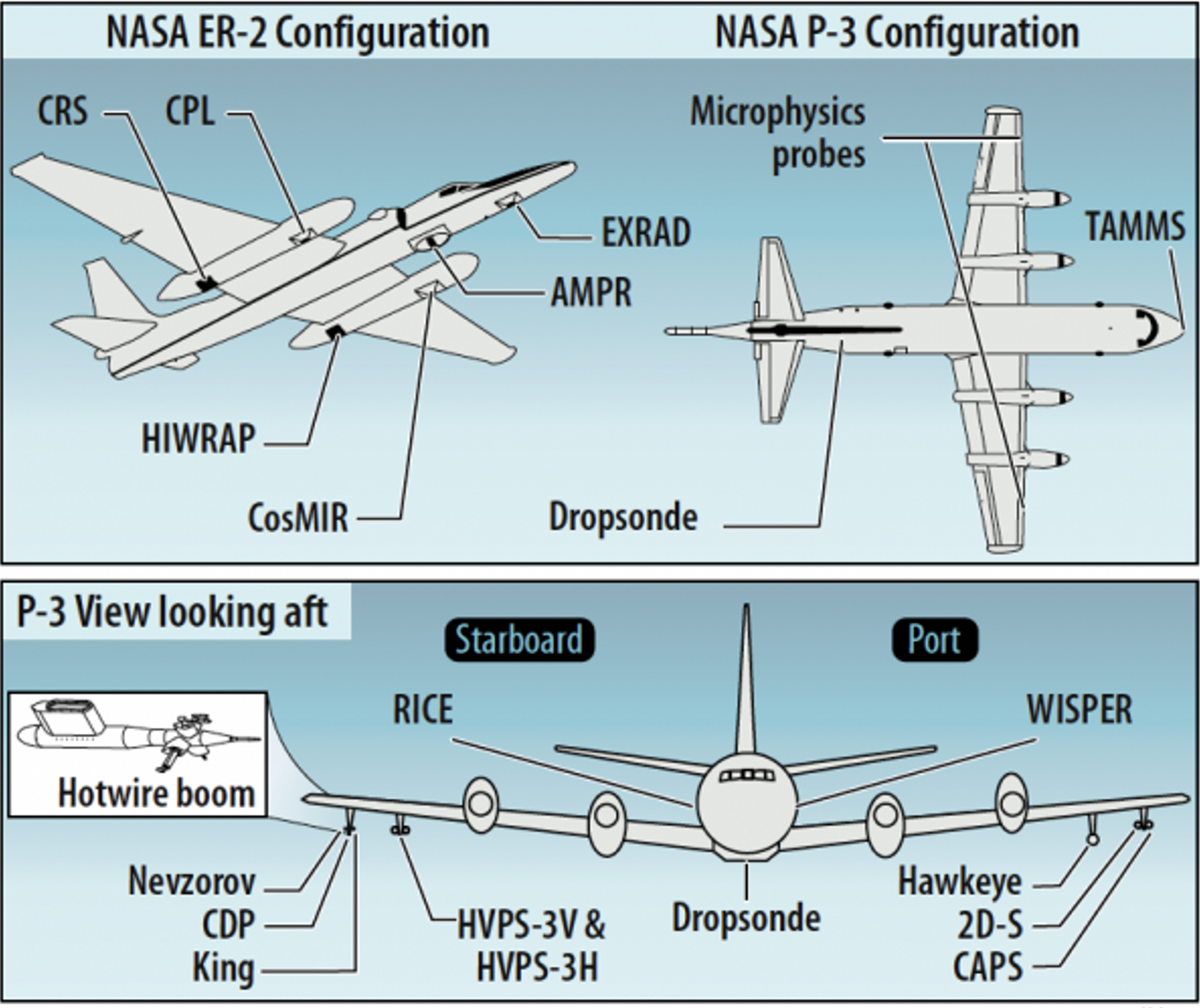
Two NASA aircraft are being used by IMPACTS to go ‘snowstorm chasing’ during three wintertime field campaigns over a three-year period. The NASA ER-2 aircraft flies above the clouds at heights of more than 15 km (9 miles), and carries instruments such as radars, lidars, and microwave sensors that are similar to instruments on satellites now. The second aircraft is the NASA P-3B, and it flies within the snowstorm. The P3B carries instruments that directly sample characteristics of the snowstorm, such as the shapes and sizes of the snow crystals and the environment in which they form. These two aircraft fly coordinated patterns within, above, and around snowstorms as the storms develop, taking data so the scientists can learn exactly how intense snow bands develop within the storms. The data from the remote sensing instruments on the ER-2 aircraft will also help scientists improve our ability to measure snow from satellites.
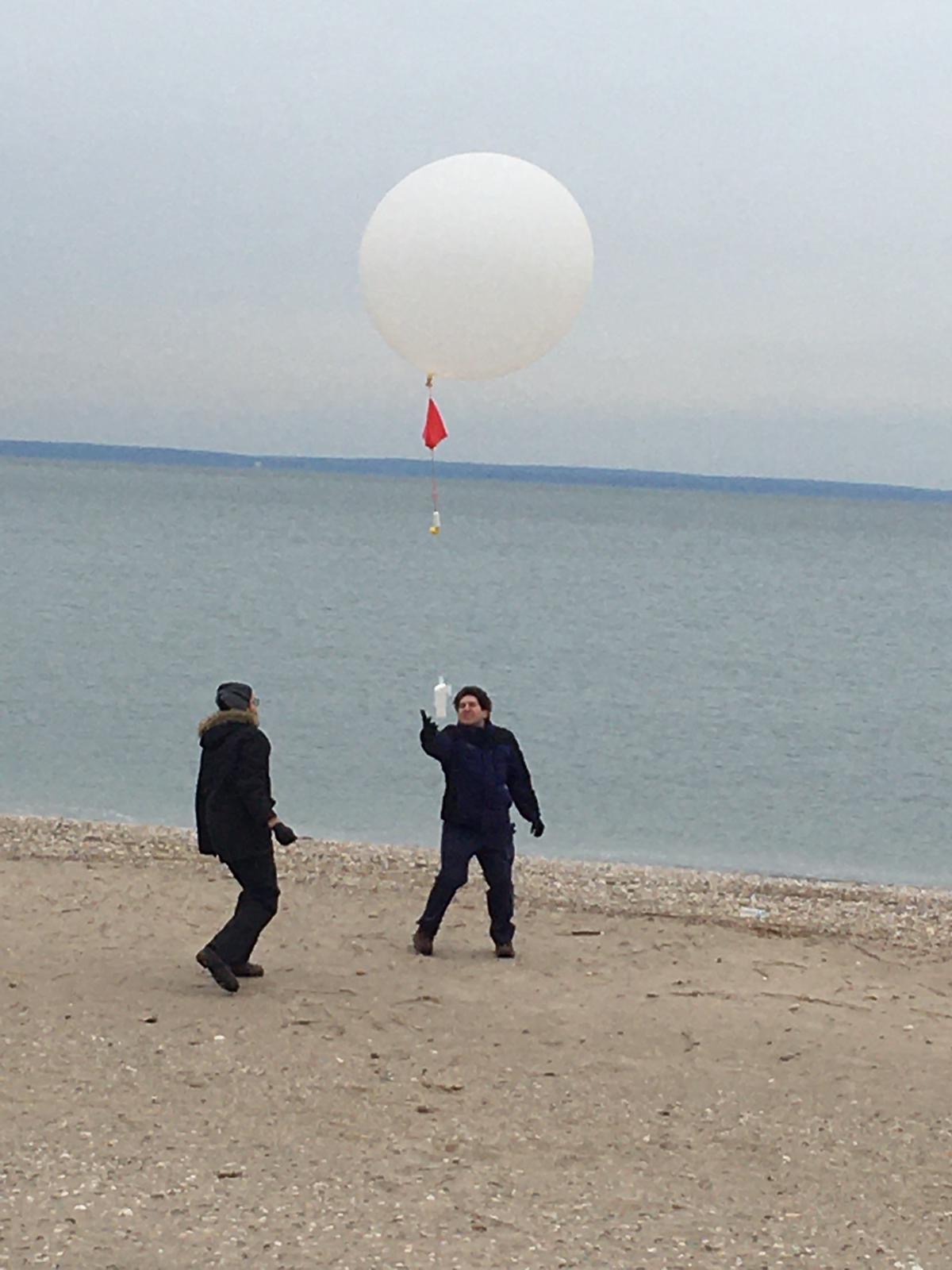
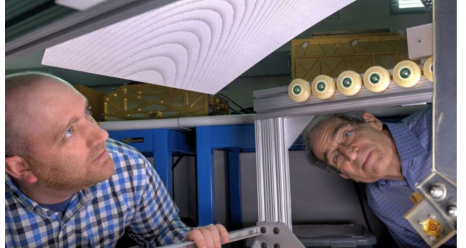
 

IMPACTS collects data from a “satellite-simulating” ER-2 and in-situ measurements from a cloud penetrating P-3, augmented by ground-based radar and rawinsonde data, multiple NASA and NOAA satellites [including GPM, GOES-16, and the Joint Polar Satellite System (JPSS)], and computer simulations. The ER-2 and P-3 provide the flight-altitude and long-endurance capabilities and payload capacity needed for the combined remote sensing and in-situ measurements.


Related Projects
New NASA research project employs an impressive array of technology to discern how and why intense bands of snow form in winter storms in order to supply forecasters with data to improve predictions of severe winter snowfall.


[fourcol_six]

Libera

Libera

Libera

https://lasp.colorado.edu/home/libera/

What causes the Earth to cool or warm?

The NASA Libera mission will monitor the flow of radiative energy through the Earth–atmosphere system. This energy drives the motions of the atmosphere and oceans, fuels photosynthesis in plants, forms the protective ozone layer, and sustains all life on Earth. The mission will maintain the decades long data record of observation from NASA’s suite of Clouds and the Earth’s Radiant Energy System (CERES) instruments. Libera, named after the daughter of Ceres in Roman mythology, will fly on the NOAA-NASA Joint Polar Satellite System (JPSS-4) scheduled to launch in 2027.

To meet NASA’s Earth Venture Continuity requirements and to advance the scientific use of Earth Radiation Budget (ERB) data, Libera defines three overarching goals:

  • Provide seamless continuity of the ERB Data Records
  • Develop a self-contained, innovative and affordable observing system
  • Provide new and enhanced capabilities that support extending ERB science goals

Libera will measure solar radiation with wavelengths between 0.3 and 5 microns reflected by the Earth system and infrared radiation with wavelengths between 5 and 50 microns emitted from the Earth system as it exits the top of the atmosphere. The sensor will also measure the total radiation leaving the Earth system at all wavelengths from 0.3 to 100 microns. An innovative additional “split shortwave” channel measuring radiation between 0.7 and 5 microns has been added to enable new Earth radiation budget science.

absorbs more heat than it emits, it warms up; if it emits more than it absorbs, it cools down.

https://lasp.colorado.edu/libera

The NASA Libera mission will monitor the flow of radiative energy through the Earth–atmosphere system. This energy drives the motions of the atmosphere and oceans, fuels photosynthesis in plants, forms the protective ozone layer, and sustains all life on Earth. The mission will maintain the decades long data record of observation from NASA’s suite of Clouds and the Earth’s Radiant Energy System (CERES) instruments. Libera, named after the daughter of Ceres in Roman mythology, will fly on the NOAA-NASA Joint Polar Satellite System (JPSS-4) scheduled to launch in 2027.

To meet NASA’s Earth Venture Continuity requirements and to advance the scientific use of Earth Radiation Budget (ERB) data, Libera defines three overarching goals:

  • Provide seamless continuity of the ERB Data Records
  • Develop a self-contained, innovative and affordable observing system
  • Provide new and enhanced capabilities that support extending ERB science goals

Libera will measure solar radiation with wavelengths between 0.3 and 5 microns reflected by the Earth system and infrared radiation with wavelengths between 5 and 50 microns emitted from the Earth system as it exits the top of the atmosphere. The sensor will also measure the total radiation leaving the Earth system at all wavelengths from 0.3 to 100 microns. An innovative additional “split shortwave” channel measuring radiation between 0.7 and 5 microns has been added to enable new Earth radiation budget science.

absorbs more heat than it emits, it warms up; if it emits more than it absorbs, it cools down.

MAIA

Multi-Angle Imager for Aerosols (MAIA)

The Multi-Angle Imager for Aerosols (MAIA) represents the first time NASA has partnered with epidemiologists and health organizations to use space-based data to study human health and improve lives.

https://maia.jpl.nasa.gov/
https://www.jpl.nasa.gov/missions/multi-angle-imager-for-aerosols-maia/

The Multi-Angle Imager for Aerosols (MAIA) investigation will seek to understand how different types of air pollution affect human health.

The Multi-Angle Imager for Aerosols (MAIA) represents the first time NASA has partnered with epidemiologists and health organizations to use space-based data to study human health and improve lives.


Orbiting Carbon Observatory-2 (OCO-2)

OCO2Orbiting Carbon Observatory (OCO2/OCO3)

 https://ocov2.jpl.nasa.gov/

https://ocov3.jpl.nasa.gov/


OCO-2 and OCO-3 NASA’s twin carbon chasing satellites show us CO2 sources and sinks.


OCO-2 was launched on July 2, 2014 and was the first US satellite dedicated to measuring  atmospheric carbon dioxide (CO2) from space, and it is still making measurements today! CO2 is a greenhouse gas, and it has been shown to be increasing due to human activities. OCO-2 has been measuring this change. The more CO2 that is in the air, the warmer the earth is becoming. This causes things like rising sea levels, melting glaciers and ice sheets, thawing permafrost, and droughts. Data from OCO-2 has already shown that tropical forests absorb CO2 in response to drought and warm temperatures, which would mean that CO2 will increase much faster in the future, speeding up the damaging effects of climate change. OCO-2 is critical to help us understand where the CO2 is coming from, how fast the emissions are increasing, and what we can do to reduce CO2 emissions to protect our planet.

“I definitely feel like there is an urgency to addressing Greenhouse Gasses and climate change. We’ve seen clearer information coming out about all the impacts in the world – sea ice and sea level, storms, etc. There is going to be so many impacts to people like food availability and water availability, that I think that it is important that we address this sooner rather than later. Making changes now to avoid emissions is going to more effective than adjusting to all the potential impacts. ” – Annmarie Eldering , Project Scientist, OCO-2

OCO-2 orbits around the earth from pole to pole. This lets it sample  what CO2 looks like over the entire planet and where emissions are the strongest. OCO-2 looks at reflected sunlight from the Earth’s surface and uses three spectrometers to measure gases in the atmosphere. Its data is used by scientists all over the world. Today, fossil fuel combustion and other human activities are currently contributing about 39 billion tons or 39 Gigatons of CO2 into the atmosphere each year. During the pandemic, many industries were closed, and cities and countries issued stay at home orders, keeping people off the road.

Scientists are using OCO-2 data to determine if there was an impact on CO2 emissions due to the COVID-19 pandemic. The data from OCO-2 remains very valuable and the OCO-2 mission will continue to contribute to scientific investigations that are related to the global carbon cycle.

How are NASA’s OCO-3 and OCO-2 different? The OCO-3 spectrometer (instrument) is a duplicate of OCO-2, and in fact was made from spare parts from OCO-2. They both measure CO2 over the earth using reflected sunlight, and they both provide a significant amount of information about climate change. What is different is where they are in space. While the older sibling OCO-2 orbits the earth from pole to pole, the younger sibling OCO-3 is hitching a ride on the International Space Station (ISS)! The path that the ISS takes around the Earth is very different from the path of the OCO-2 satellite, and this means that OCO-3 sees the earth in a different way. OCO-3 will be able to measure different regions of the Earth at all different times of day, so we can see how CO2 is changing throughout the day over forests. OCO-3 is also able to swivel and point to a compact, city-sized area to get more details on CO2 behavior.

Along with OCO-2, OCO-3 will show us what the emissions of CO2 are around the Earth, and how it is absorbed by forests and impacting their health. We can use data from the instruments to find some plumes from power plants and cities. The two OCO siblings are helping us understand climate change and how we can prepare for the future climate.


The Orbiting Carbon Observatory-2 (OCO-2) model intercomparison project (MIP) is a collaboration among atmospheric CO2 modelers to study the impact of assimilating OCO-2 retrieval data into atmospheric inversion models. The results from the set of simulations performed by this project have been released as a level-4 flux product.


Orbiting Carbon Observatory-3 (OCO-3)

OCO3

Orbiting Carbon Observatory-3
(OCO-3)

The Orbiting Carbon Observatory 3, or OCO-3, is a future space instrument designed to investigate important questions about the distribution of carbon dioxide on Earth as it relates to growing urban populations and changing patterns of fossil fuel combustion.

NASA has developed and assembled the instrument using spare materials from the successful development and launch of the Orbiting Carbon Observatory 2 in 2014 and will host the instrument on the Japanese Experiment Module- Exposed Facility (JEM-EF) onboard the International Space Station.

The Orbiting Carbon Observatory 3, or OCO-3, is a future space instrument designed to investigate important questions about the distribution of carbon dioxide on Earth as it relates to growing urban populations and changing patterns of fossil fuel combustion.

NASA has developed and assembled the instrument using spare materials from the successful development and launch of the Orbiting Carbon Observatory 2 in 2014 and will host the instrument on the Japanese Experiment Module- Exposed Facility (JEM-EF) onboard the International Space Station.


ORACLES

ORACLES

Observations of aeRosols Above CLouds and their intEractionS (ORACLES)

Determine the impact of African biomass burning aerosol on cloud properties and the radiation balance over the SE Atlantic and acquire a process level understanding of aerosol-cloud-radiation interactions


TEMPO

TEMPO

Tropospheric Emissions: Monitoring of Pollution (TEMPO)


The TEMPO (Tropospheric Emissions: Monitoring Pollution) mission aims to answer this question with more detail and precision than ever before, by creating a revolutionary new dataset of atmospheric chemistry measurements from space. TEMPO will be the first space-based instrument to monitor major air pollutants across the North American continent every daylight hour at high spatial resolution.

The TEMPO (Tropospheric Emissions: Monitoring Pollution) mission aims to answer this question with more detail and precision than ever before, by creating a revolutionary new dataset of atmospheric chemistry measurements from space. TEMPO will be the first space-based instrument to monitor major air pollutants across the North American continent every daylight hour at high spatial resolution.

TROPICS

TROPICS

Time-Resolved Observations of Precipitation structure and storm Intensity with a Constellation of Smallsats (TROPICS)

Storm trackers observing inside dangerous tropical cyclones to identify storm intensity and structure

https://tropics.ll.mit.edu/CMS/tropics/Mission-Overview

https://disasters.nasa.gov/programs/tropics

NASA TROPICS blog

Imagine if you could peer inside a powerful tropical cyclone (TC). NASA’s TROPICS does and it aims to save lives in the process.

Tropical cyclones have been a source of some of the most devastating natural disasters, claiming countless lives, accounting for more than half of U.S. billion-dollar natural disaster damage events (https://www.ncdc.noaa.gov/billions/summary-stats), and disrupting society. A rise in global temperatures is expected to ramp up storm intensity and rainfall. NASA’s Time Resolved Observations of Precipitation structure and storm Intensity with a Constellation of Smallsats (TROPICS) is expected to launch in 2022 and will address science objectives that will ultimately improve our ability to accurately predict storm strength, giving people more time to evacuate and avoid loss of life. TROPICS is on a mission to find out how TCs form and intensify by measuring 3D temperature, humidity, cloud ice, and precipitation. This mission is critical because close to 60 million people, nearly 1/5 of Americans, live along the East and Gulf coasts. Recent years have seen major landfalling TCs along Atlantic coasts such as Irma, Maria, Michael, and Dorian that can cause significant death and destruction; damage projections suggest a doubling of US economic losses from TCs every ten years!

“TROPICS will observe deep inside cyclones, so we can forecast storms better, improve disaster preparation and ultimately save lives.” -William Blackwell, Principal Investigator, TROPICS

TROPICS provides high‐resolution, rapid updates on storm intensity, size, and precipitation structure. The science team will analyze observations of temperature, moisture, and precipitation at spatial resolutions ranging from approximately 15 kilometers to several hundred kilometers across the sky. Better storm prediction over all ocean basins is provided by six small satellites called CubeSats. They fly in three separate low-Earth orbital planes. Each CubeSat hosts a high‐performance sensor measuring water vapor absorption and precipitation‐sized ice particles. These instruments allow the team to view inside the core of a TC, with high resolution from different angles. The power of this knowledge about how TCs form, how they are maintained, and what makes some more intense than others, will lead to smarter storm predictions and better storm preparation by local authorities and residents.

Related Projects
MIT Lincoln Laboratory, Lunar Laser Communications Demonstration (LLCD); Laser Enhanced Mission Communications Navigation and Operational Services (LEMNOS); Deep Space Optical Comm (DSOC) Psyche Discovery Mission; Transiting Exoplanet Survey Satellite (TESS)
NASA Earth Science Technology Office. MicroMAS, CubeSat in 2018.

Tropical cyclones have been a source of some of the most devastating natural disasters, claiming countless lives, accounting for more than half of U.S. billion-dollar natural disaster damage events (https://www.ncdc.noaa.gov/billions/summary-stats), and disrupting society.  A rise in global temperatures is expected to ramp up storm intensity and rainfall. NASA’s Time Resolved Observations of Precipitation structure and storm Intensity with a Constellation of Smallsats (TROPICS) is expected to launch in 2022 and will address science objectives that will ultimately improve our ability to accurately predict storm strength, giving people more time to evacuate and avoid loss of life.  TROPICS is on a mission to find out how TCs form and intensify by measuring 3D temperature, humidity, cloud ice, and precipitation. This mission is critical because close to 60 million people, nearly 1/5 of Americans, live along the East and Gulf coasts. Recent years have seen major landfalling TCs along Atlantic coasts such as Irma, Maria, Michael, and Dorian that can cause significant death and destruction; damage projections suggest a doubling of US economic losses from TCs every ten years!

Powered by WordPress. Designed by WooThemes