

Libera
https://lasp.colorado.edu/home/libera/
What causes the Earth to cool or warm?
The NASA Libera mission will monitor the flow of radiative energy through the Earth–atmosphere system. This energy drives the motions of the atmosphere and oceans, fuels photosynthesis in plants, forms the protective ozone layer, and sustains all life on Earth. The mission will maintain the decades long data record of observation from NASA’s suite of Clouds and the Earth’s Radiant Energy System (CERES) instruments. Libera, named after the daughter of Ceres in Roman mythology, will fly on the NOAA-NASA Joint Polar Satellite System (JPSS-4) scheduled to launch in 2027.
To meet NASA’s Earth Venture Continuity requirements and to advance the scientific use of Earth Radiation Budget (ERB) data, Libera defines three overarching goals:
- Provide seamless continuity of the ERB Data Records
- Develop a self-contained, innovative and affordable observing system
- Provide new and enhanced capabilities that support extending ERB science goals
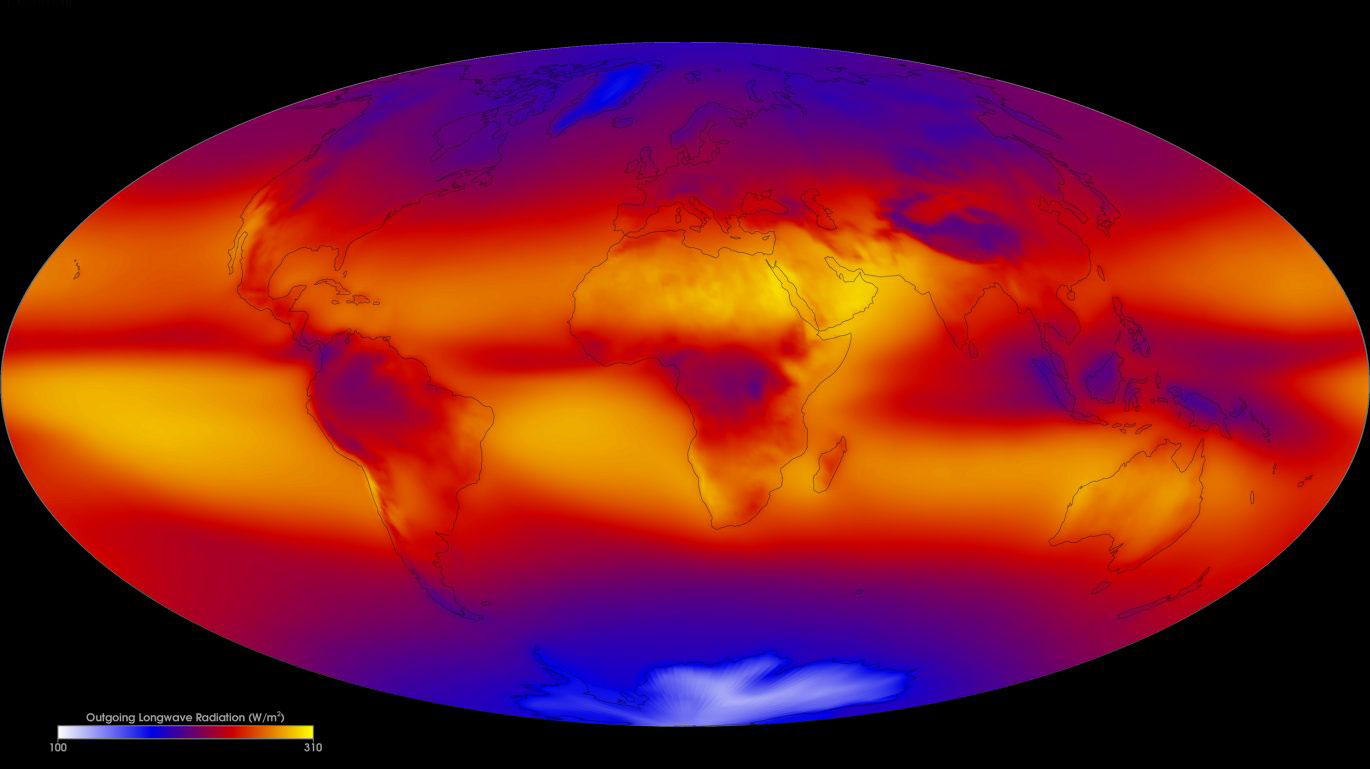
Libera will measure solar radiation with wavelengths between 0.3 and 5 microns reflected by the Earth system and infrared radiation with wavelengths between 5 and 50 microns emitted from the Earth system as it exits the top of the atmosphere. The sensor will also measure the total radiation leaving the Earth system at all wavelengths from 0.3 to 100 microns. An innovative additional “split shortwave” channel measuring radiation between 0.7 and 5 microns has been added to enable new Earth radiation budget science.
absorbs more heat than it emits, it warms up; if it emits more than it absorbs, it cools down.
The NASA Libera mission will monitor the flow of radiative energy through the Earth–atmosphere system. This energy drives the motions of the atmosphere and oceans, fuels photosynthesis in plants, forms the protective ozone layer, and sustains all life on Earth. The mission will maintain the decades long data record of observation from NASA’s suite of Clouds and the Earth’s Radiant Energy System (CERES) instruments. Libera, named after the daughter of Ceres in Roman mythology, will fly on the NOAA-NASA Joint Polar Satellite System (JPSS-4) scheduled to launch in 2027.
To meet NASA’s Earth Venture Continuity requirements and to advance the scientific use of Earth Radiation Budget (ERB) data, Libera defines three overarching goals:
- Provide seamless continuity of the ERB Data Records
- Develop a self-contained, innovative and affordable observing system
- Provide new and enhanced capabilities that support extending ERB science goals
Libera will measure solar radiation with wavelengths between 0.3 and 5 microns reflected by the Earth system and infrared radiation with wavelengths between 5 and 50 microns emitted from the Earth system as it exits the top of the atmosphere. The sensor will also measure the total radiation leaving the Earth system at all wavelengths from 0.3 to 100 microns. An innovative additional “split shortwave” channel measuring radiation between 0.7 and 5 microns has been added to enable new Earth radiation budget science.
absorbs more heat than it emits, it warms up; if it emits more than it absorbs, it cools down.